
这个模样很好笑。

这个模样很好笑。
最近发现留言的网友把这里当成了昆明电视台”街头巷尾”栏目,对不起了,这里不是昆明电视台网站,请要留言的访问 http://www.kmtv.com.cn/ ,不过除了有个“内部论坛”(访问不了)外,其他也没地方留言。
新闻热线请打电话:8099999
昆视网站利用10兆宽带光纤进行传输,拥有独立的服务器3台,可以提供多个页面浏览、完善的邮件系统服务、强大的交互性功能、完善的视频点播系统、方便的内部管理系统、全能的流量统计功能、严格的多级审核发布系统以及快速的短信互动系统等。除首页外,开通的二级、三级页面达十多个,可以囊括我台所有频道和栏目,另外还专门为广告节目营销中心提供了广告和节目交易平台。内容丰富、使用方便、交互性强、特点鲜明。
主 编:邹金凯
副主编:蔡立
联系电话:0871-5392131
电子邮件:[email protected]
坏调的齿轮用万能胶粘后发现不行,该用电烙铁热粘,呵呵,这样就粘牢了,打印机又可以工作了。
HP 3820 喷墨打印机在电源打开的情况下,按住电源按钮不放松,按出纸按钮4次后都松开,打印机打印自测页,可以看到总共打印了多少页和序列号,软件版本等信息,我的是820页。
HP喷墨打印机服务站,就是这个工作不正常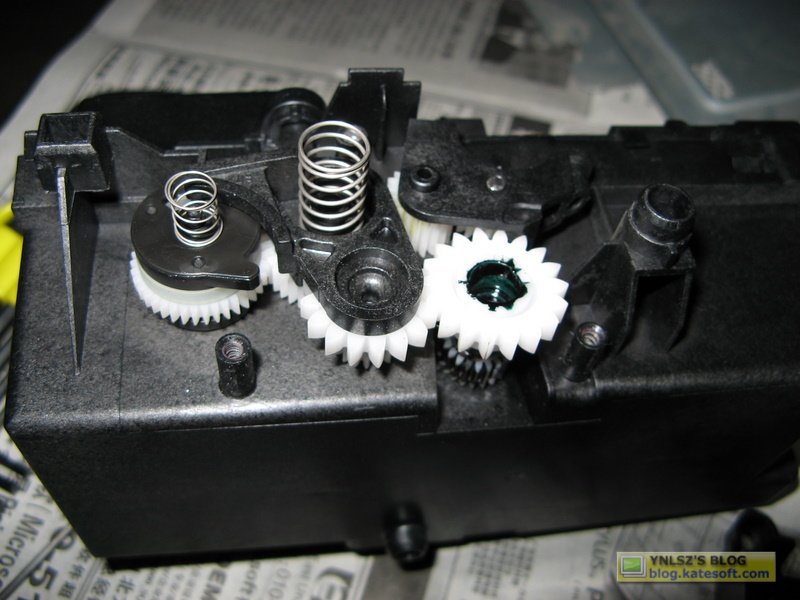
是齿轮坏了,就这个齿轮,换个新的费用不高,HP维修中心要求换全部齿轮,报价185元。
用万能胶试试能不能粘牢 
HP DESKJET 3820 喷墨打印机拿回来了,等有空自己拆开看看。
今天我打了电话才通知我,是服务站的问题,整个换要180,打印机才多少?!其实就是几个齿轮坏了,郁闷。
不打算修了 This printer absolutely SUCKS! 
I found fixyourownprinter.com have this topic : HP Deskjet 3820
These people have the same problem like me
I once got blamed for a DJ 3820 konking out because I had recently worked on the system that used it.
All DJ printers will eventually need service. I regularly repair models that are approaching 10 years old. All they generally need is a mechanical 'tune-up', but if the electronics has failed, fairly rare, they are instant parts machines. People will not spend $150-$200 to repair a typical inkjet printer.
The DJ 3820 was made for a price driven market, i.e. the customer wants a 'deal' and the seller 'throws in' a cheap printer with the computer. All HP and others are doing is filling the demand and making a profit by selling short-filled cartridges. If you have an argument with the repairability and reliability, take it up with HP. All I know is that you can't repair them without parts and/or documentation. Check for yourself.
http://partsurfer.hp.com/cgi-bin/spi/main?sel_flg=modinfo&model=DESKJE T_3820
送去HP维修中心好几天,HP维修中心一直没有主动打电话和我联系, HP喷墨打印机到底是什么故障,维修需要多少费用都不说。
除了手上的一张“HP消费类外设送修服务单”外,打印机就这样无音讯了 -_-!
下午送到121数码城的HP维修中心,等检测结果需要1-2天。